

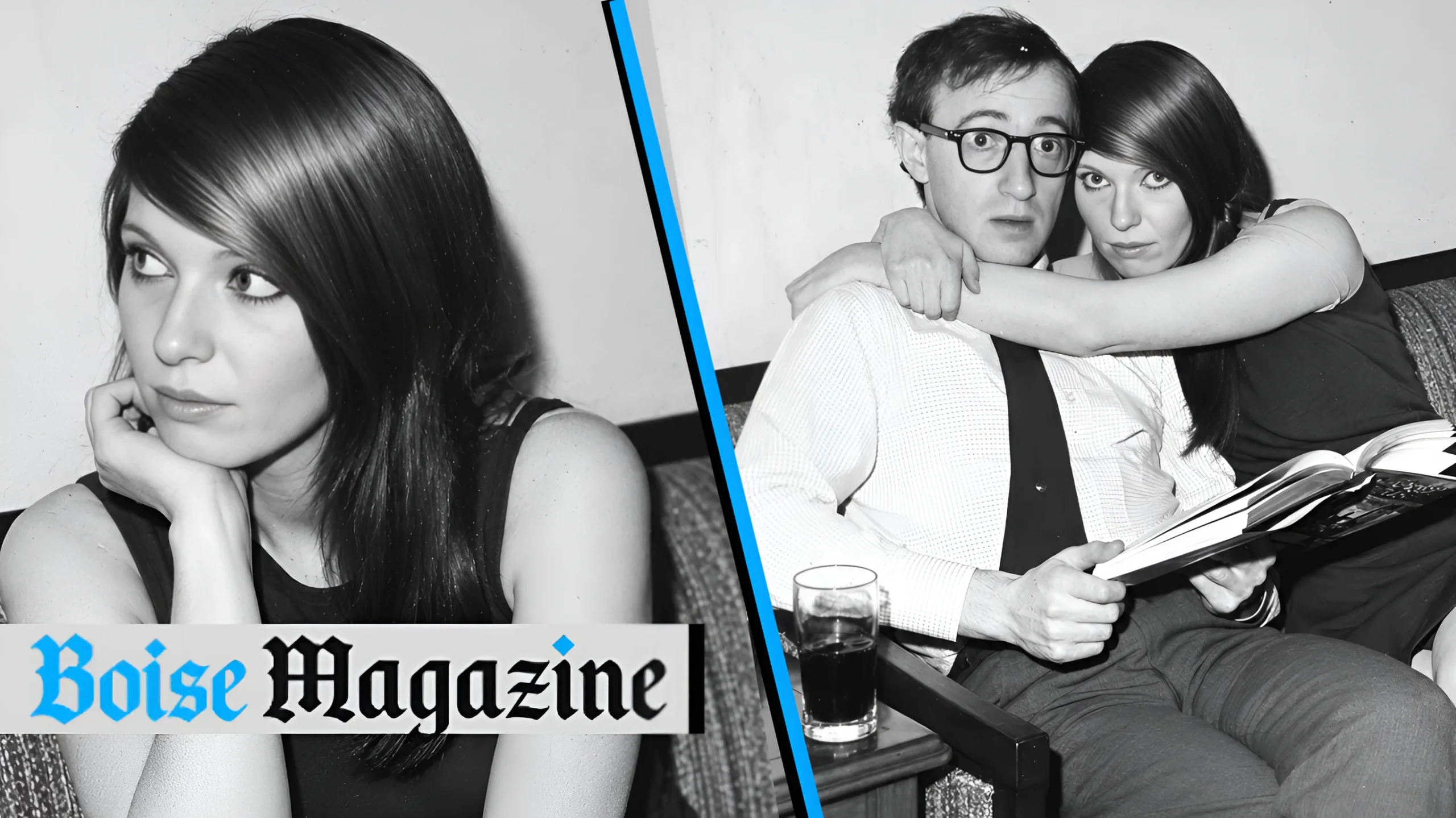
Harlene Rosen is best known as the first wife of American filmmaker, comedian, and writer Woody Allen. Their marriage began in 1956, when both were young and Allen was still developing his professional career. Although the relationship ended after only a few years, it became a frequently discussed chapter of Allen’s early biography because of his public jokes about the marriage and a subsequent legal dispute involving Rosen.
Unlike Allen, who became internationally recognized through films such as Annie Hall, Manhattan, and Hannah and Her Sisters, Rosen maintained a relatively private life. Much of the information about their relationship has come from Allen’s recollections and biographies written about him, rather than extensive public interviews with Rosen herself.
However, her story became part of public discussion again in 2015 when biographer David Evanier contacted her while researching Woody: The Biography. Her contribution to the book offered a rare opportunity for her perspective to enter the historical record.
Who Is Harlene Rosen?
Harlene Rosen is an American woman whose public recognition comes primarily from her former marriage to Woody Allen. The couple married in March 1956, before Allen became an established filmmaker or a widely recognized stand-up comedian.
Contemporary and retrospective accounts describe Rosen as approximately 17 years old at the time of the wedding, while Allen was 20. Their marriage began during a period when both were entering adulthood and considering their futures.
The relationship eventually broke down, with the couple separating around 1959. Their divorce was legally completed in 1962, according to established biographical accounts.
Although Allen later married actress Louise Lasser and subsequently Soon-Yi Previn, his marriage to Rosen remained part of discussions about his early personal experiences and developing comedy career.
Harlene Rosen’s Early Life and Education
Reliable information about Harlene Rosen’s childhood, parents, and early family background is relatively limited. She is associated with New York City during her youth, when Woody Allen was beginning to establish himself as a comedy writer.
Biographical accounts of Allen describe Rosen as a young woman interested in music and education. Some accounts identify her as a student of philosophy at Hunter College, while others describe her participation in musical activities.
These details provide a glimpse of her interests during the period surrounding their marriage, although her complete educational record is not extensively documented.
Her exact birth date is also not firmly established by the strongest accessible sources. Published accounts frequently describe her as 17 when she married Allen in 1956, suggesting a birth year around 1938 or 1939, depending on the precise date.
Without a reliably documented birthday, assigning her an exact current age would be unnecessarily speculative.
How Did Harlene Rosen Meet Woody Allen?
Harlene Rosen met Woody Allen before he became a major figure in American entertainment. At the time, Allen was developing his skills as a comedy writer and exploring professional opportunities in television and performance.
Born Allan Stewart Konigsberg in 1935, Allen had already demonstrated an interest in humor, writing, and music during his teenage years.
Accounts of their early relationship suggest that Rosen and Allen shared an interest in music. Some biographical descriptions connect their introduction to social and musical activities within New York’s young artistic community.
However, the precise circumstances of their first meeting are not consistently established through contemporary reporting.
What is clear is that their relationship developed while Allen was still at an early stage of his career, long before the films that would eventually make him internationally recognizable.
Their decision to marry in 1956 marked an important personal development for both individuals.
Marriage to Woody Allen in 1956
Harlene Rosen and Woody Allen married in March 1956. Allen was approximately 20 years old, while Rosen was still in her teenage years.
Their marriage began during a period of professional uncertainty for Allen. Although he had started writing comedy material, he had not yet become the established performer and filmmaker audiences would later recognize.
Young marriage can involve significant adjustments, particularly when both partners are developing their personal identities and professional ambitions.
However, it would be inappropriate to apply general assumptions about relationships to every aspect of Rosen and Allen’s experience.
Biographical accounts describe disagreements and difficulties during their marriage, but much of the surviving commentary reflects Allen’s recollections rather than independently documented statements from both partners.
This imbalance is important because it means the public record does not provide a complete picture of Rosen’s experiences.
Why Did Harlene Rosen and Woody Allen Divorce?
The marriage began to deteriorate toward the end of the 1950s, and the couple separated around 1959.
Their divorce was legally finalized in 1962, approximately six years after their wedding.
Accounts of the relationship suggest that disagreements, immaturity, and differing expectations contributed to its breakdown. Nevertheless, those explanations should be understood within the limits of the available evidence.
Allen later discussed his first marriage in interviews and autobiographical writing, occasionally reflecting critically on his own behavior.
However, Rosen did not maintain an equally visible public platform through which to describe the relationship in detail.
Consequently, it would be misleading to present one person’s interpretation as a complete explanation of the divorce.
The established timeline remains straightforward: the couple married in 1956, separated approximately three years later, and completed their divorce in 1962.
The Legal Dispute Between Harlene Rosen and Woody Allen
One of the most significant documented events associated with Harlene Rosen occurred after her marriage ended.
During his developing comedy career, Woody Allen made jokes about his former wife and their relationship. Some of this material appeared in public performances and television-related appearances.
Rosen objected to the way she was portrayed and pursued legal action.
A 1991 Los Angeles Times review of Eric Lax’s biography of Allen specifically referenced Rosen’s lawsuit against Allen and NBC. The review described a $1 million claim alleging that his jokes had defamed her.
The legal dispute demonstrates that Rosen’s objections to Allen’s public treatment of their marriage were more than informal disagreements.
However, the reported amount represented the value of the claim, not necessarily a financial award or settlement.
The available reporting does not establish a sufficiently detailed account of the final legal resolution to support claims that Rosen received a specific sum of money.
Why the Lawsuit Matters
The dispute provides important context for understanding the relationship between personal experiences and public comedy.
Comedians frequently draw material from their relationships, marriages, and everyday experiences. However, when jokes describe identifiable individuals, questions can arise about reputation, privacy, and the accuracy of public portrayals.
Rosen’s legal action illustrates how a private individual may challenge the way a public performer uses personal history as entertainment.
It also explains why her story continued to appear in biographies of Allen long after the couple had separated.
The case should not be exaggerated into evidence of an entire public career in litigation or activism. It remains a specific documented dispute arising from the way her former husband publicly discussed their relationship.
How Woody Allen’s Comedy Influenced Rosen’s Public Image
Woody Allen’s early comedy frequently explored subjects such as romantic disappointment, marriage, anxiety, and interpersonal conflict.
His former marriage became part of that material, contributing to an image of domestic incompatibility that audiences encountered through jokes and performances.
Because Allen eventually became famous, those accounts circulated much more widely than Rosen’s personal recollections.
This created an imbalance in how the relationship was remembered.
A reviewer writing in the Los Angeles Times in 1991 questioned why Rosen’s perspective had not been included in Eric Lax’s biography and observed that the relationship was largely presented through Allen’s viewpoint.
That criticism remains relevant to interpreting the available material.
A public figure’s account of a shared experience can provide valuable historical information, but it does not automatically represent every participant’s understanding of what happened.
Rosen’s limited presence in early biographies should therefore not be confused with agreement with the way she was portrayed.
Harlene Rosen’s Later Contact With Woody Allen’s Biographer
One of the most notable developments in Rosen’s later public history occurred in 2015.
Author David Evanier was researching Woody: The Biography, a book examining Allen’s personal background and entertainment career.
During a November 2015 interview with the website The Woody Allen Pages, Evanier explained that he had spent more than a year attempting to locate Rosen.
He eventually contacted her, and she contributed a birthday message intended for Allen’s 80th birthday. The message was included in Evanier’s biography.
This was significant because Rosen had rarely participated in public discussions of her former husband’s life.
Her willingness to contribute demonstrated that she was prepared to engage with that particular historical account many decades after their marriage.
However, a birthday message should not automatically be interpreted as proof that every past disagreement had been resolved or that the former couple had developed an ongoing personal relationship.
The documented fact is that Rosen communicated with the biographer and supplied a message for the book.
Harlene Rosen’s Life After Divorce
Following her divorce from Woody Allen, Harlene Rosen generally remained outside mainstream entertainment reporting.
Unlike Allen’s second wife, Louise Lasser, who pursued a professional acting career, Rosen did not become widely recognized through film or television appearances.
Reliable information about her later employment, relationships, and personal activities is limited.
Some websites provide elaborate descriptions of her supposed professional achievements, remarriage, or financial circumstances. However, these claims often lack dependable documentation.
Her participation in Evanier’s 2015 biography remains one of the clearest later references to her.
This limited public record does not establish that Rosen withdrew from professional or social life. It simply means her individual experiences were not extensively covered by entertainment journalists.
Did Harlene Rosen and Woody Allen Have Children?
Harlene Rosen and Woody Allen did not have children together, according to established biographical accounts.
Their marriage began when both were young and ended before Allen entered the later stages of his career.
Allen subsequently developed other relationships and family connections, including his marriage to Soon-Yi Previn.
However, those later circumstances belong to separate chapters of his personal history and do not establish additional details about Rosen’s life.
Keeping these relationships distinct is important when researching Allen’s family background.
Is Harlene Rosen Still Alive?
Authoritative recent information about Harlene Rosen’s present circumstances is limited.
Her documented communication with David Evanier in 2015 establishes that she was alive and able to participate in his research at that time.
However, this does not independently establish her circumstances in 2026.
Without a reliable recent statement, public record, or confirmed obituary, a definitive claim about her current status would require further verification.
The same caution applies to claims about her present residence, occupation, and relationship status.
What Is Harlene Rosen’s Net Worth?
There is no reliably documented public estimate of Harlene Rosen’s personal net worth.
Some online biographies publish financial figures without identifying verifiable evidence about her assets, earnings, investments, or liabilities.
Her former marriage to Woody Allen does not establish her individual financial position.
Similarly, the reported $1 million defamation lawsuit should not be confused with money she necessarily received.
Without reliable information about the resolution of that claim or her later finances, calculating a specific personal net worth would be speculative.
Why Harlene Rosen Remains Historically Interesting
Harlene Rosen’s significance extends beyond being the first wife of a famous filmmaker.
Her marriage belonged to Woody Allen’s formative years, before his international success as a comedian, screenwriter, and director.
The relationship also became part of his public comedic material, creating a lasting connection between Rosen’s private experiences and Allen’s developing professional identity.
Her subsequent legal dispute demonstrated that she challenged aspects of that portrayal rather than simply accepting the public narrative.
Decades later, her communication with biographer David Evanier added another dimension to the historical record.
Together, these events provide a more substantial account than the brief references often found in lists of Allen’s former spouses.
They also illustrate why celebrity biographies benefit from including the perspectives of people who did not themselves become famous.
Final Thoughts
Harlene Rosen was Woody Allen’s first wife, marrying him in 1956 before their relationship ended and their divorce was finalized in 1962.
Although Allen’s later career made their early marriage a subject of public curiosity, Rosen largely maintained her privacy. The legal dispute over his public jokes and her later contribution to David Evanier’s 2015 biography remain particularly important documented events.
Her story highlights the difference between a relationship as described by a famous entertainer and the fuller experiences of the individuals involved.
While much of Rosen’s later life remains outside the public record, the available evidence establishes her place in an important chapter of American entertainment history.
Explore More Related Stories: